Email marketing for beginners – You probably have heard somebody say nothing gets rain money in the list If you have just begun — say less than a year — and you haven’t started email marketing in India yet, then you’re literally leaving $$$ on the table.
Not because email is trendy. It works in a way that always works, even when your Instagram reach is halved while you were asleep or the ad costs shot up to be double what they were
As per Litmus’ 2024 State of Email report, the average ROI for email marketing is ₹3,600 for every ₹100 spent. That’s not a made-up stat. That is why brands with millions of Instagram followers continue to invest serious cash into growing their email lists.
Oh and for the newbies, the best part? You can start for free. Totaly free — no card, no paid ads.
This guide takes you through all the way from selecting a tool to creating your first campaign. If you stick with this, you’ll have working email setup before the week’s out.
Short Answer: In perspective to beginners, email marketing in India is a process used for permission-based collecting emails of potential customers, sending them useful content, offers or updates to build trust and generate sales. You can start 100% free with Mailchimp or Brevo and even a list of 200–300 subscribers will generate real revenue if your emails are applicable and well-written.
Why Email Marketing Still Works
Social media platforms change their algorithms constantly. What worked on Instagram in 2022 doesn’t work in 2026. Your organic reach can drop 60% overnight for no reason.
Email doesn’t work like that.
When someone gives you their email address, you have a direct line to them. No algorithm deciding whether your message shows up. No paying for reach you already earned.
Here’s something most beginners don’t realise: the average email open rate in India hovers around 20–25% for well-managed lists (Mailchimp benchmarks, 2024). Compare that to organic Instagram reach, which for most small accounts is under 5%. You’re reaching 4–5x more of your own audience with email.
And unlike social media followers, your email list is yours. If Mailchimp shuts down tomorrow, you export your list and move it somewhere else. You can’t do that with Instagram followers.
For small businesses and freelancers in India, email marketing is also one of the most budget-friendly options. You’re not paying per click. You’re not competing in an auction. You send an email, and it arrives.
Choosing an Email Tool
You don’t need to pay for anything when you’re just starting out. Here are the three tools most beginners in India actually use:
Mailchimp is the most popular worldwide. Their free plan lets you send to up to 500 contacts and send 1,000 emails per month. The interface is easy to understand, and they have good templates. The downside: once you cross 500 contacts, the paid plans are expensive.
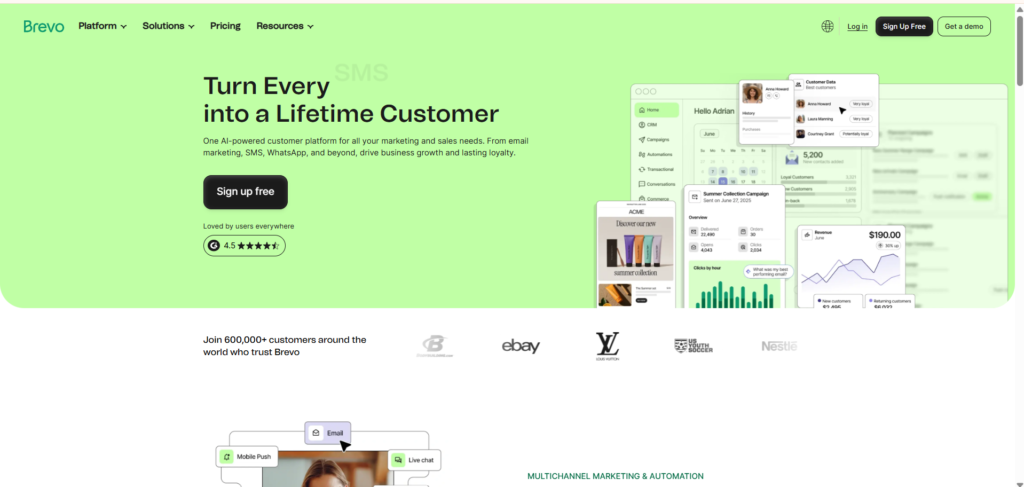
Brevo (formerly Sendinblue) is what I recommend for most Indian beginners. The free plan gives you unlimited contacts and up to 300 emails per day. Their automation features are available even on free. For a small business sending weekly newsletters, this is more than enough.
MailerLite is clean, simple, and gives you 1,000 subscribers free. Good for bloggers and content creators who want something minimal.
Tool | Free Contacts | Free Emails/Month | Automation Free? | Difficulty |
Mailchimp | 500 | 1,000 | Limited | Easy |
Brevo | Unlimited | ~9,000 (300/day) | Yes | Easy |
MailerLite | 1,000 | 12,000 | Yes | Easy |
Zoho Campaigns | 2,000 | 6,000 | No | Moderate |
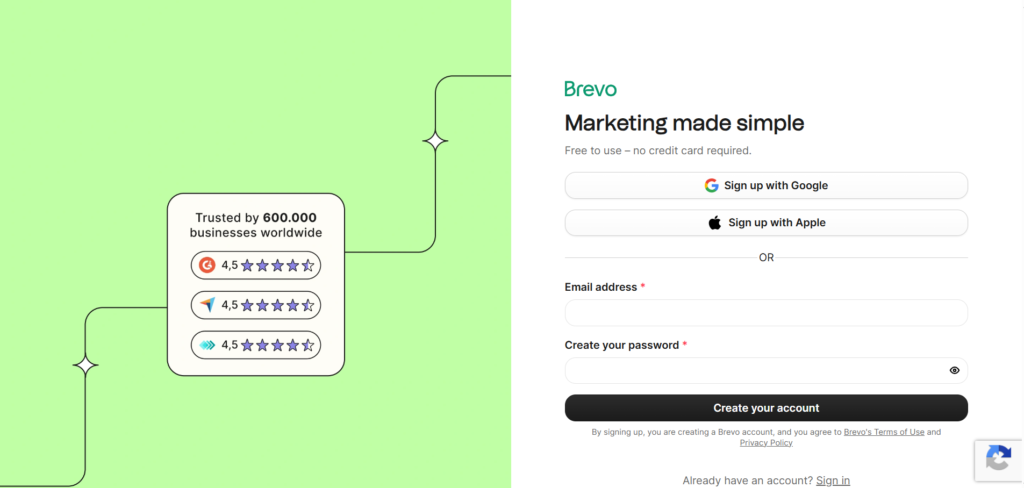
For most beginners doing email marketing in India on a zero budget — start with Brevo. Sign up, verify your email, connect your domain if you have one, and you’re ready.
Building Your Email List
This is where most people get stuck. They set up the tool, then stare at a list with zero contacts.
Here’s the thing: you don’t need to buy a list. Actually, don’t ever buy a list. Those emails are low quality, often invalid, and can get your account banned for spam.
You build it organically. And it starts small. That’s normal.
The fastest ways to get your first 100 subscribers:
Start with people who already know you. Post on your personal WhatsApp status or LinkedIn that you’re starting an email newsletter about your area of expertise. Ask people to share their email if they want to receive it. This alone can get you 30–50 emails from people who actually want to hear from you.
Then add a signup form to your website. Every email tool gives you an embed code. Put it on your homepage, your blog sidebar, and especially at the end of your blog posts. Someone who just read your full article is the most likely person to subscribe.
Offer something in exchange. This is called a lead magnet. It doesn’t have to be a 50-page ebook. A one-page checklist, a free template, or a short PDF guide works just as well. If you run a digital marketing blog, a “Free SEO Checklist for Indian Websites” is exactly the kind of thing people will give their email for.
Also, add your newsletter signup link to your Instagram bio, WhatsApp Business profile, and even your email signature.
Writing Your First Campaign
A lot of beginners overthink this. They wait until they have 500 subscribers, or until they’ve “figured out their niche,” or until the email looks perfect.
Send the first email when you have 20 subscribers.
The earlier you start sending, the faster you learn what your audience responds to. A perfect email to 20 people beats a perfect email that never gets sent.
Here’s a simple structure for your first few campaigns:
- Welcome email — Send this automatically when someone subscribes. Thank them for joining, tell them what to expect, and give them the lead magnet if you promised one. Keep it under 200 words.
- Value email — Share something useful. A tip, a resource, a short how-to. No selling. Just give them a reason to stay subscribed.
- Soft pitch — After 2–3 value emails, you can mention your service or product once. The key word is “once.” Don’t make every email a sales pitch.
- Story email — Share something real. A mistake you made, a lesson you learned, a result you got for a client. Stories build trust faster than any amount of professional copy.
For each email, keep it focused on one idea. Don’t try to cover five topics in a single email. Pick one thing, say it clearly, and stop.
Email Subject Line Tips
Your subject line decides whether your email gets opened or ignored. Everything else — the design, the content, the offer — comes after the open. If people don’t open, nothing matters.
Here are a few subject line approaches that consistently work for Indian audiences:
- Curiosity gap: “The one thing holding back your email list (it’s not what you think)”
- Direct benefit: “3 ways to get more clients without paid ads
- Personalisation: Use their first name — “Hey [Name], quick question”
Urgency (real, not fake): “Offer closes Friday — ₹499 down to ₹199” - Numbers: Emails with numbers in the subject line get higher open rates across most industries
What to avoid: vague subject lines like “Newsletter Issue #4” or “Updates from us.” Nobody opens those. Also avoid all caps, excessive exclamation marks, and words like “FREE” in caps — spam filters catch those.
One practical tip: most email tools let you A/B test subject lines. Use it. Send one subject to 30% of your list, a different one to another 30%, and send the winner to the remaining 40% an hour later. Brevo and Mailchimp both support this even on free plans.
Automation for Beginners
Automation sounds technical. It’s not. It’s just setting up emails to send automatically based on what a subscriber does.
The most important automation for any beginner is the welcome sequence. This is a series of 3–5 emails that go out over the first 7–10 days after someone subscribes. By the time they’ve received all five, they know who you are, what you offer, and why they should stay.
Here’s a simple welcome sequence structure:
- Day 0: Welcome + deliver lead magnet
- Day 2: Your story — why you do what you do
- Day 4: Your best piece of content or resource
- Day 6: What subscribers can expect from you going forward
- Day 8: Soft pitch — your service, product, or main offer
Set this up once, and it runs for every new subscriber forever. That’s the power of automation. You do the work once.
Brevo’s free plan lets you set this up completely. Go to the Automations tab, create a “welcome” workflow, add each email with a delay, and activate it. Takes about 45 minutes to set up the first time.
Measuring Open Rates
Once you start sending, you need to track what’s working. Email tools give you a dashboard with the key numbers. Here’s what they mean:
Open rate — percentage of subscribers who opened your email. A healthy open rate for a small, engaged list is 25–40%. Industry averages are lower, but a small personal list often beats them.
Click-through rate (CTR) — percentage who clicked a link inside your email. Anything above 2–3% is solid. Above 5% is strong.
Unsubscribe rate — percentage who unsubscribed after receiving the email. Under 0.5% per email is normal. Higher than that means either your content isn’t matching expectations or you’re emailing too frequently.
Bounce rate — emails that couldn’t be delivered. Hard bounces (invalid addresses) should be removed. Most tools do this automatically.
The metric that matters most when starting email marketing in India is your open rate. If it’s above 25%, your subject lines are working and your list is engaged. If it drops below 15%, something’s off — either your subject lines are weak, you’re emailing too much, or your list has grown with low-quality signups.
Start Small, Stay Consistent
Email marketing doesnt require a big list to get results. A good relevant audience and sending regularly.
Pick a tool. Set up a signup form. Offer something useful. Write the first email. That’s it. You soon develop everything else — improved subject lines, automation, segmentation — based on what your audience responds to.
The businesses in India that profit the most from email marketing are not those with the biggest lists. They are the ones who have been consistently sending for two years and actually know their subscribers.
Begin against little stakes, now. The rest you will learn on the way.
My Real Experience With Email Marketing
When I started the Digi Segment newsletter, the first list had 47 subscribers — mostly people I knew personally from LinkedIn and WhatsApp contacts. The open rate on the first email was 61%. That sounds great, but it’s typical when your list is small and everyone on it actually knows you.
What I noticed quickly: the emails that performed best were the ones where I wrote like I was talking to one person. Not “Dear subscriber” energy — more like a message to a colleague I wanted to help.
The worst-performing emails were the ones I spent the most time designing. Heavy on visuals, fancy layout, multiple columns. Open rate was fine but click-through was terrible. People read a nice-looking email and don’t feel like there’s anything to do.
Plain text or near-plain text emails — one column, minimal images, conversational tone — consistently outperformed the designed ones for click-through. That was the biggest thing I’d tell any beginner: don’t stress the design. Stress the words.
Now the list is larger and the open rates have settled around 28–32%, which is above average for the digital marketing niche. That number matters more to me than follower counts on any platform, because these are people who actively chose to hear from me.
If you are completely new to digital marketing in India, then we recommend reading our full guide for beginners before jumping into your email campaign.
Frequently Asked Questions
Yes, you can start completely free. Tools like Brevo (unlimited contacts, 300 emails/day free) and Mailchimp (500 contacts free) let you run full email campaigns at no cost. You only need to pay once you scale beyond the free limits, which won't happen for months when you're just starting out.
Brevo is the best option for most Indian beginners in 2026. It offers unlimited contacts on the free plan, automation features, and good deliverability. Mailchimp is also popular but limits you to 500 contacts on the free plan, which fills up faster than you expect.
Open rate is the percentage of subscribers who opened your email. A good open rate for a small Indian business list is 25–35%. Higher than that means your subject lines and audience targeting are strong. Lower than 15% usually means your subject lines need work or your list isn't as engaged.
The fastest way to get your first 100 subscribers is to offer something useful for free — a checklist, a template, a short guide — and promote it on WhatsApp, Instagram, and your website. Don't buy lists. Focus on organic signups from people who genuinely want your content.
They serve different purposes, but email generally has a higher ROI. Social media is great for discovery and reach. Email is better for conversions and retention. The best strategy uses both — social media brings in new people, and email turns them into buyers and loyal followers. For direct sales, email almost always wins.

Founder, Digi Segment
SEO Strategist & Digital Marketing Expert
Hardik Vaghani is a digital marketing professional and SEO strategist based in Surat, Gujarat, India. He founded Digi Segment to share practical, experience-backed insights, case studies, and step-by-step guides on SEO, digital marketing, AI tools, and online growth strategies.
With hands-on experience across Search Engine Optimisation, Technical SEO, Google Ads, Meta Ads, and Content Strategy, Hardik has worked with businesses across e-commerce, real estate, healthcare, home improvement, and solar industries to improve organic visibility, local rankings, and lead generation through ethical, white-hat strategies.
He specialises in Core Web Vitals optimisation, on-page SEO, keyword research aligned with search intent, and building scalable content frameworks that rank.
Expertise: SEO | Technical SEO | Google Ads | Meta Ads | LinkedIn Ads | Pinterest Ads | ChatGPT Ads | Content Strategy | Core Web Vitals | WordPress | Digital Marketing | Lead Generation | Local SEO