A shop owner in Surat once told me his Instagram had 4,000 followers and his phone still didn’t ring. That’s the problem with most lead generation strategies small businesses try first they chase attention instead of contacts. Attention doesn’t pay invoices. A name, a number, and an email do.
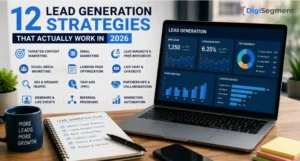
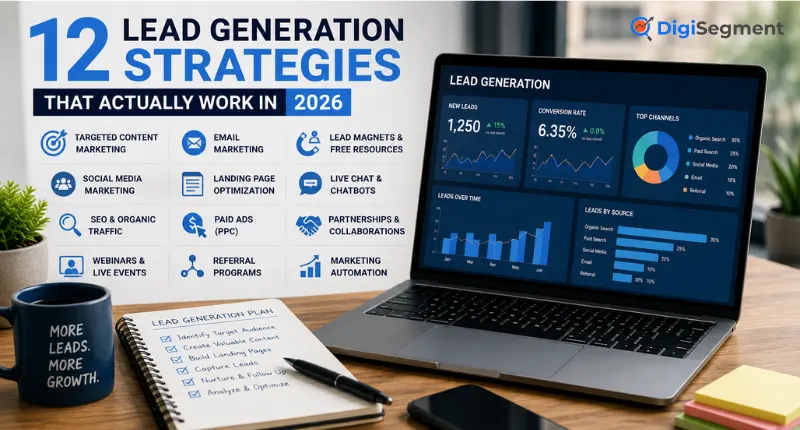
At Digi Segment and through client work at HV Digital Marketing, we’ve tested lead generation strategies across e-commerce, real estate, healthcare, home improvement, and solar. Some worked in weeks. Some quietly wasted a whole quarter’s budget. This guide walks through the twelve that actually moved the needle for small, service-based businesses in 2026.
The Short Version
Lead generation is the process of turning strangers into people who’ve handed over their contact details because they want what you’re offering. The strategies that work best for small businesses combine one or two organic channels (SEO, content, local search) with one paid channel (Google Ads or Meta Ads), tied together with a lead magnet and a simple email follow-up. You don’t need all twelve strategies below. You need three or four, done properly.
What Is Lead Generation and Why It Matters
Lead generation strategies exist because cold traffic rarely buys on the first visit. Someone lands on your site, reads for ninety seconds, and leaves. Unless you capture their email, phone number, or WhatsApp contact before they go, that visit was wasted.
Here’s the number that should worry every small business owner: 30% of marketers still name lead generation as their single biggest growth challenge, according to research compiled by DesignRush. Not traffic. Not brand awareness. Getting someone to actually raise their hand.
That’s the gap this article is built to close. And no, you don’t need a massive budget to close it. You need the right lead generation strategies applied consistently, not scattered across every channel that trends on LinkedIn this month.
Strategy 1-4: Content Marketing, SEO, Social Media, and Email
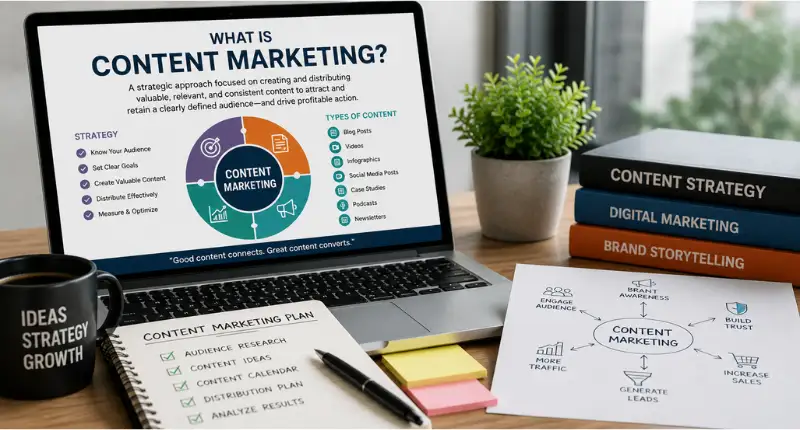
Strategy 1: Content Marketing
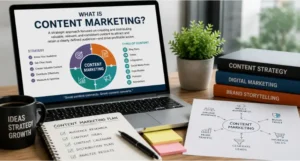
Write for the exact question your customer types into Google before they call you. “How much does solar installation cost in Gujarat” beats “why solar is the future” every single time, because one has buyer intent and the other doesn’t.
Small businesses that maintain an active blog see 126% more lead growth than those that don’t, per data compiled by Impact Plus from HubSpot’s research. That stat holds up in our own client accounts too the ones publishing monthly consistently outrank the ones who post twice a year in a panic.
Strategy 2: SEO
Content without SEO structure is a diary. Content with proper on-page SEO, internal linking, and a real focus keyword becomes a lead generation machine that runs while you sleep. We covered the fundamentals in our guide to keyword research for beginners if you’re starting from zero.
Strategy 3: Social Media
Social won’t replace SEO. But it shortens the trust gap. A prospect who’s seen three helpful posts from your business before visiting your website converts faster than a cold click from an ad.
Strategy 4: Email
Email still out-earns almost every other channel per rupee spent. We go deeper on setup in our guide to email marketing for beginners in India it’s the cheapest lead generation channel on this entire list once you already have a list to send to.
Strategy 5-8: Google Ads, Landing Pages, Lead Magnets, and Webinars
Strategy 5 Google Ads
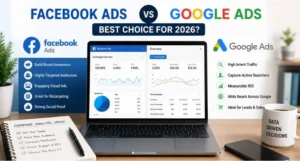
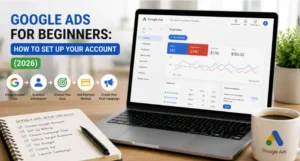
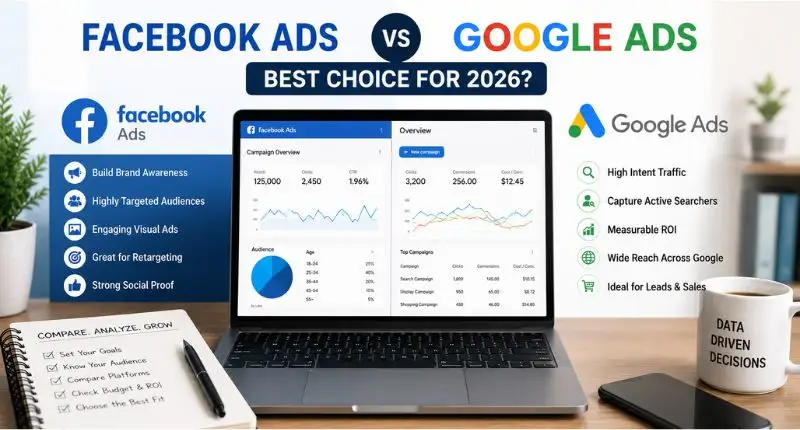
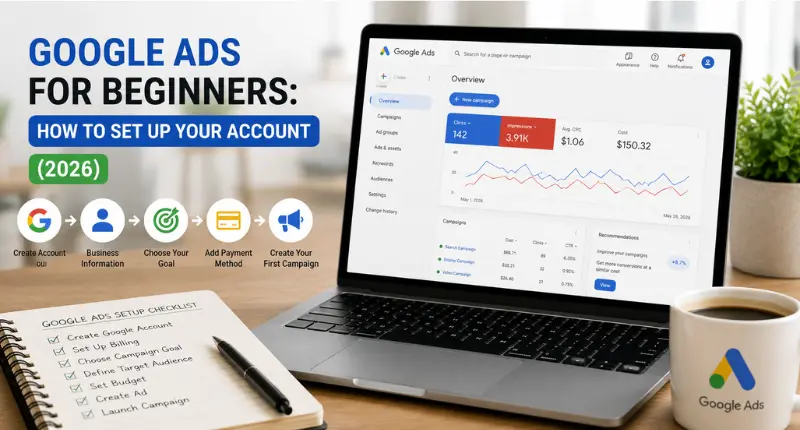
Google Ads is the fastest of these twelve lead generation strategies to show results. Turn it on Monday, get calls by Wednesday. The catch: cost per lead compounds fast if your landing page isn’t converting. If you’re weighing Ads against Meta, our comparison of Facebook Ads vs Google Ads breaks down which fits which business type, and our Google Ads for beginners guide covers account setup start to finish.
Strategy 6: Landing Pages
Never send paid traffic to your homepage. A dedicated landing page with one offer, one form, and zero navigation menu converts at a completely different rate. We’ll cover the exact form structure in the next section.
Strategy 7: Lead Magnets
A lead magnet is something useful enough that a stranger will trade their email for it: a checklist, a calculator, a discount code, a free consultation slot. Weak lead magnets (“subscribe to our newsletter”) convert at under 1%. Specific ones (“Get the 2026 GST checklist for small traders”) can hit 15-20% on a well-built landing page.
Strategy 8: Webinars
Webinars aren’t just a B2B SaaS tactic. A local real estate agent running a “how to buy your first home in Surat” session pulls warmer leads than any cold ad ever will. Cost per lead for webinars averages $72, according to Cvent’s webinar benchmarking research cheaper than most paid search campaigns, and the leads arrive pre-qualified because they showed up voluntarily.
Strategy 9-12: Referrals, Local SEO, WhatsApp, and Partnerships
Strategy 9: Referrals
Ask. That’s it. Most small businesses do great work and never ask a happy customer to send someone their way. A simple “know anyone else who’d need this?” after a good job, sent by WhatsApp or email, costs nothing and converts better than most paid channels.
Strategy 10: Local SEO
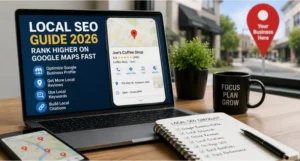
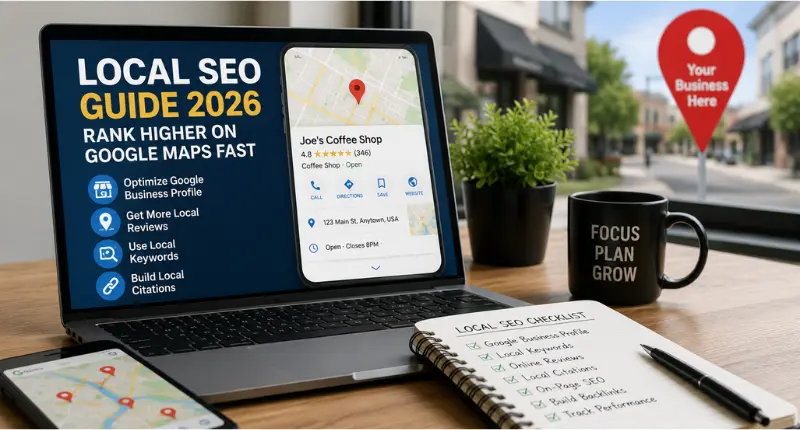
If you serve a specific city, this is non-negotiable. Our full local SEO guide walks through Google Business Profile setup, NAP consistency, and review generation in detail all free, all high-impact for lead generation aimed at nearby customers.
Strategy 11: WhatsApp
In India specifically, WhatsApp Business converts faster than email for a huge share of local service businesses. A quick automated reply, a catalog link, and a human following up within the hour beats any contact form.
Strategy 12: Partnerships
Pair up with a business that shares your audience but isn’t a competitor. A solar installer partnering with a home renovation contractor. A dentist partnering with an orthodontist. Cross-referrals are lead generation with zero ad spend.
The 8-Step Process That Ties These Lead Generation Strategies Together
Picking strategies at random is how most small businesses waste a year. Here’s the sequence that actually works:
- Define your ideal customer. Be specific not “homeowners,” but “homeowners in Surat planning a kitchen renovation in the next 3 months.”
- Choose 2-3 channels, not all twelve. Pick based on where your customer already spends time.
- Create a lead magnet tied to a real pain point, not a generic freebie.
- Build a landing page with one clear offer and one form.
- Drive traffic through your chosen channels organic, paid, or both.
- Capture leads through the form, WhatsApp, or a call button.
- Nurture via email with 3-5 follow-up messages, not one and done.
- Convert with a clear call, demo, or quote.
The result is a repeatable system instead of a one-time traffic spike that fades by next month.
How to Build a High-Converting Lead Capture Form
Short forms convert better. Every extra field drops completion rate. Ask for name and phone (or email) first. Only ask for budget, timeline, or company size on a second step, if at all.
A few rules that hold across almost every industry we’ve tested:
- 3 fields beats 7 fields, nearly every time
- A single, specific headline beats a clever one
- Mobile-first design matters more than desktop, since most Indian traffic arrives on phones
- A visible phone number next to the form catches the people who’d rather call than type
CRM Tools for Managing and Nurturing Leads
A lead sitting in your inbox is a lead you’ll forget by Thursday. Small businesses don’t need enterprise CRM. They need somewhere leads land automatically and get followed up without relying on memory.
| Tool | Best For | Free or Paid | Difficulty | Rating |
| Zoho CRM | Small teams, India-based pricing | Freemium | Easy | 4.5/5 |
| HubSpot CRM | Content + email nurturing in one place | Freemium | Medium | 4.5/5 |
| WhatsApp Business App | Solo operators, local services | Free | Easy | 4/5 |
| Google Sheets + Forms | Absolute beginners, zero budget | Free | Easy | 3.5/5 |
| Pipedrive | Sales-heavy teams tracking a pipeline | Paid | Medium | 4/5 |
How to Measure Your Lead Generation ROI
Track cost per lead, lead-to-customer conversion rate, and average order value. Multiply the last two, subtract your spend, and that’s your real return not just “how many leads came in.”
A simple way to frame it for a small business: if Google Ads costs ₹15,000 a month and produces 30 leads, that’s ₹500 per lead. If 6 of those convert at an average order value of ₹8,000, that’s ₹48,000 in revenue against ₹15,000 spent. A basic ROI calculator concept just needs three inputs: total spend, number of leads, and conversion rate. From there the math does itself.
A quick case study: a home renovation client running Google Ads plus a lead magnet checklist went from 12 leads a month to 41 leads a month over 90 days, without increasing ad spend. The lift came almost entirely from a better landing page and a follow-up email sequence, not more traffic.
What Actually Happened With a Solar Client in Gujarat
In 2025, we ran lead generation for a solar installation business outside Surat. Their first move, before we got involved, was boosting Facebook posts. Leads came in cheap, around ₹80 each. Almost none converted. Turned out most of them were curious homeowners, not people ready to spend ₹3-4 lakh on a rooftop system.
We switched the primary channel to Google Ads targeting high-intent searches like “solar subsidy Gujarat 2026,” paired it with a free site-visit lead magnet, and added a WhatsApp follow-up within 30 minutes of form submission. Cost per lead rose to roughly ₹450. Conversion rate on those leads was nearly 5x higher. Revenue from the same monthly budget more than doubled by month three.
I’ll be honest I expected the cheaper Facebook leads to work better with more nurturing. They didn’t. Intent beat volume every time on this account.
Frequently Asked Questions
Q: What is the cheapest way to generate leads online?
A: Referrals and organic SEO cost nothing beyond your time. Asking existing customers for referrals and publishing helpful, keyword-targeted content are the two lowest-cost lead generation strategies on this list, though they take longer to compound than paid ads.
Q: How many leads does a small business need per month?
A: It depends entirely on your close rate and average order value, not a fixed number. A business closing 1 in 5 leads at ₹10,000 average value needs far fewer leads than one closing 1 in 20 at ₹500 average value. Work backward from your revenue goal.
Q: What is a lead magnet and how do I create one?
A: A lead magnet is a free, specific piece of value a checklist, calculator, discount, or consultation slot offered in exchange for contact details. Build one around the exact question your ideal customer is already asking, not a generic newsletter signup.
Q: How do I convert leads into paying customers?
A: Follow up fast, ideally within an hour, and use a multi-touch sequence rather than one message. Most conversions happen on the second or third contact, not the first.
Q: Which lead generation tool is free to use?
A: Google Business Profile, WhatsApp Business, Google Forms, and Zoho CRM’s free tier all cost nothing and cover most of what a small business needs to start capturing and managing leads.
Q: How long does it take to see results from lead generation?
A: Paid channels like Google Ads can produce leads within days. Organic strategies like SEO and content marketing usually take 3-6 months to build real momentum, but the leads tend to cost less and convert better long term.
Q: Is WhatsApp actually useful for lead generation in India?
A: Yes, and often more than email for local, service-based businesses. Response rates on WhatsApp run far higher than email in the Indian market, especially for bookings, quotes, and quick service questions.

Founder, Digi Segment
SEO Strategist & Digital Marketing Expert
Hardik Vaghani is a digital marketing professional and SEO strategist based in Surat, Gujarat, India. He founded Digi Segment to share practical, experience-backed insights, case studies, and step-by-step guides on SEO, digital marketing, AI tools, and online growth strategies.
With hands-on experience across Search Engine Optimisation, Technical SEO, Google Ads, Meta Ads, and Content Strategy, Hardik has worked with businesses across e-commerce, real estate, healthcare, home improvement, and solar industries to improve organic visibility, local rankings, and lead generation through ethical, white-hat strategies.
He specialises in Core Web Vitals optimisation, on-page SEO, keyword research aligned with search intent, and building scalable content frameworks that rank.
Expertise: SEO | Technical SEO | Google Ads | Meta Ads | LinkedIn Ads | Pinterest Ads | ChatGPT Ads | Content Strategy | Core Web Vitals | WordPress | Digital Marketing | Lead Generation | Local SEO