You know what’s funny? Most people think SEO is just about stuffing keywords into their content and calling it a day. But here’s the thing—that’s only scratching the surface. And honestly, if you’re still doing just that, you’re probably wondering why your website isn’t ranking.
So let me tell you a story. Last month, I talked to a business owner who spent $5,000 on “premium content,” but her website was still stuck on page three of Google. Why? Because her site took 12 seconds to load, and Google couldn’t even crawl half her pages properly. That’s the brutal reality of ignoring technical SEO.
But flip that around, and I’ve seen websites with lightning-fast load times and perfect technical scores that still got zero traffic because their content was, well, garbage.
This brings us to the age-old debate: technical SEO vs on page SEO. Which one matters more? Should you focus on one over the other? And most importantly, what are the shocking truths nobody’s telling you?
In this post, I’m going to break down everything you need to know about the difference between technical SEO vs on-page SEO. We’ll explore seven shocking truths that will completely change how you approach your SEO strategy. So buckle up, because some of these might surprise you.
What is Technical SEO?
Let’s start with the foundation. Technical SEO is basically everything happening behind the scenes of your website. Think of it as the plumbing and electrical wiring of a house—you don’t see it, but without it, nothing works.
Core Components of Technical SEO
Technical SEO involves optimizing your website’s infrastructure so search engines can crawl, index, and understand your content properly. And trust me, if Google can’t access your pages, it doesn’t matter how amazing your content is.
Site Speed and Performance
Speed matters. A lot. Studies show that if your page takes longer than three seconds to load, more than half your visitors will bounce. So Google pays attention to this because they want to send users to fast, responsive sites.
Mobile-Friendliness and Responsiveness
Here’s a stat that might shock you: over 60% of searches happen on mobile devices. And if your site looks terrible on a phone, Google’s going to penalize you for it. That’s just how it is.
XML Sitemaps and Robots.txt
These are like roadmaps for search engines. Your XML sitemap tells Google which pages to crawl, and robots.txt tells them which ones to avoid. Mess these up and Google might miss your best content entirely.
SSL Certificates and HTTPS
Security isn’t optional anymore. Google has confirmed that HTTPS is a ranking factor. So if you’re still running on HTTP, you’re basically telling Google (and your visitors) that security doesn’t matter to you.
Why Technical SEO Matters for Rankings
Technical SEO creates the foundation for everything else. You can have the best content optimization and perfect keyword placement, but if your site has crawl errors or broken redirects, Google won’t even see it.
Common Technical SEO Issues to Avoid
The most common mistakes I see are duplicate content issues, slow page speed, broken internal linking, and poor mobile optimization. These might seem small, but they add up fast.
What is On Page SEO?
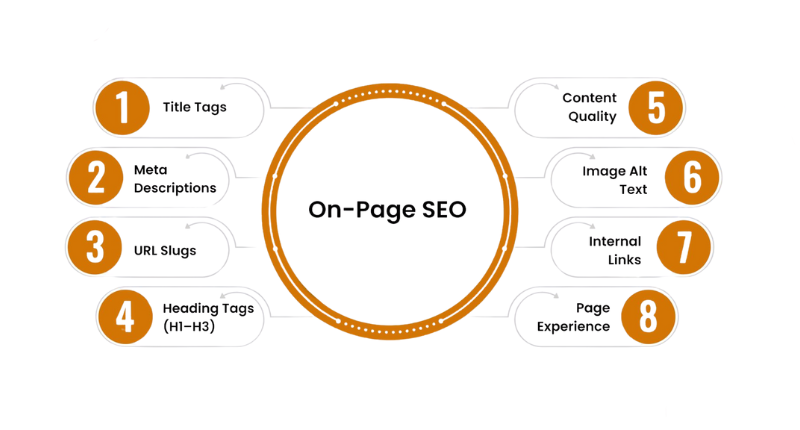
Now let’s talk about on page SEO—the stuff you can actually see and touch on your website. This is where content quality meets strategic optimization.
Essential Elements of On Page SEO
On page SEO is all about optimizing individual pages to rank higher and earn more relevant traffic. And it’s not just about sprinkling keywords everywhere.
Title Tags and Meta Descriptions
Your title tag is the first thing people see in search results. And your meta description? That’s your elevator pitch to convince them to click. Both need to be compelling and include your target keywords naturally.
Header Tags (H1-H6) Optimization
Header tags aren’t just for making text bigger. They create a hierarchy that helps both readers and search engines understand your content structure. Your H1 should include your main keyword, and H2s and H3s should support your overall topic.
Content Quality and Keyword Placement
This is where the magic happens. Quality content answers real questions, solves actual problems, and provides genuine value. But you also need strategic keyword optimization using your focus keyword naturally throughout your content, including variations and LSI keywords.
Internal Linking Structure
Internal links are like highways connecting different parts of your website. They help distribute page authority and guide visitors to related content. For example, if you’re looking for expert digital marketing services, Digi Segment offers comprehensive SEO solutions that combine both technical and on-page strategies.
Why Technical SEO Matters for Rankings
Technical SEO creates the foundation for everything else. You can have the best content optimization and perfect keyword placement, but if your site has crawl errors or broken redirects, Google won’t even see it.
Common Technical SEO Issues to Avoid
The most common mistakes I see are duplicate content issues, slow page speed, broken internal linking, and poor mobile optimization. These might seem small, but they add up fast.
The Role of User Experience in On Page SEO
Google doesn’t just look at keywords anymore. They analyze user behavior—how long people stay on your page, whether they click through to other pages, and if they immediately bounce back to search results. So user experience is now a critical ranking factor.
On Page SEO Best Practices for 2025
Focus on creating comprehensive, valuable content that satisfies search intent. Use natural language, include multimedia elements like images with proper alt text optimization, and make sure your content is easy to scan with bullet points and short paragraphs.
Technical SEO vs On Page SEO: Key Differences
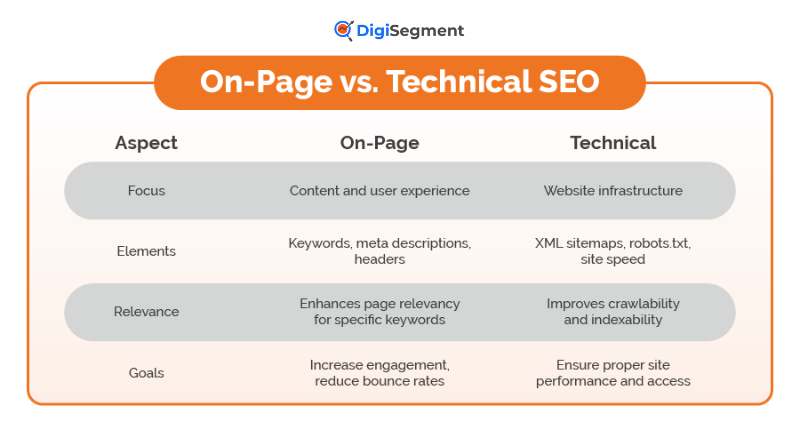
Here’s where things get interesting. Understanding the technical SEO vs on page SEO comparison helps you allocate resources effectively.
Scope and Focus Areas
Technical SEO focuses on site architecture, server optimization, and crawlability. On page SEO focuses on content, keywords, and user engagement. They’re different sides of the same coin.
Implementation Complexity
Technical SEO often requires developer knowledge or specialized tools. On page SEO is more accessible—anyone can learn content optimization and meta tags optimization with some practice.
Impact on Search Rankings
Both matter equally, but they impact rankings differently. Technical SEO removes barriers, while on page SEO actively pushes you forward.
Shocking Truth #1: Technical SEO Can't Save Poor Content
Let me be blunt: you can have the fastest, most technically perfect website in the world, but if your content sucks, you’re not ranking. Period.
Why Content Quality Always Wins
Google’s algorithm has gotten incredibly sophisticated. It can detect thin content, keyword stuffing, and low-value pages. So even with perfect technical foundations, poor content will sink you.
The Balance Between Technical Excellence and Content Value
The sweet spot is having both. A technically sound site makes your great content visible and accessible. But without that great content, there’s nothing worth making visible.
Shocking Truth #2: On Page SEO is Useless Without Solid Technical Foundation
This is the flip side. I’ve seen beautiful, engaging content that never gets found because the website has critical technical issues blocking Google’s crawlers.
How Technical Issues Block Content Visibility
Imagine writing a masterpiece and putting it in a locked room. That’s what happens when technical problems prevent indexing. Your amazing on page seo techniques mean nothing if Google can’t access your pages.
Real-World Examples of Technical Failures
I once worked with a client who had 500+ blog posts that weren’t indexed because of a misconfigured robots.txt file. All that effort, completely wasted because of one technical mistake.
Shocking Truth #3: 90% of Sites Have Critical Technical SEO Errors
This isn’t an exaggeration. Studies show that the vast majority of websites have at least one critical technical SEO issue. And most site owners have no idea.
Most Common Technical SEO Mistakes
The biggest culprits are crawl budget waste, duplicate content issues, and broken redirects. These problems compound over time if left unchecked.
How to Audit Your Site for Technical Problems
Use tools like Google Search Console and Screaming Frog to identify issues. Run regular audits—at least quarterly—to catch problems early.
Shocking Truth #4: On Page Optimization Takes 10x More Time Than Most Think
People think on page SEO is quick. Just add some keywords and boom, you’re done. But that’s not how it works.
The Real Work Behind Quality On Page SEO
Proper on page seo best practices involve keyword research, competitor analysis, content creation, optimization, and continuous refinement. It’s a process, not a one-time task.
Shocking Truth #5: Google Prioritizes Technical SEO Over On Page in Core Updates
Recent algorithm updates have heavily emphasized Core Web Vitals and page experience signals. Google is basically saying: fix your technical foundation first.
Core Web Vitals Impact on Rankings
Loading speed, interactivity, and visual stability now directly impact rankings. Sites that ignore these metrics are seeing significant drops in visibility.
Shocking Truth #6: You Need Both to Compete in 2025
Here’s the reality: technical seo vs on page seo which is better is the wrong question. You need both. Your competitors are optimizing both, so you can’t afford to choose just one.
The Synergy Between Technical and On Page SEO
When you combine fast load times with compelling content, that’s when magic happens. Technical SEO amplifies your on page efforts, and vice versa.
How Top-Ranking Sites Leverage Both Strategies
Check any top-ranking page in your niche. I guarantee they have both solid technical foundations and excellent on page optimization. That’s not coincidence.
If you’re serious about dominating your market, partnering with agencies like HV Digital Marketing can help you develop integrated strategies that address both technical and on page SEO effectively.
Shocking Truth #7: Most SEO Tools Only Show Half the Picture
Your favorite SEO tool probably focuses heavily on either technical or on page metrics. And that creates blind spots in your strategy.
Comprehensive Approach to SEO Analysis
Use multiple tools to get complete visibility. Combine technical crawlers with content analysis platforms and user experience metrics for a full picture.
Technical SEO vs On Page SEO: Which Should You Prioritize?
So what should you focus on first? Well, it depends on your situation.
For New Websites
Start with technical SEO. Build your foundation right from day one. Then layer in quality content with proper on page optimization.
For Established Websites
Audit both areas. Fix critical technical issues first, then optimize your highest-traffic pages for better on page performance.
For E-commerce Sites
Technical SEO is crucial because you have thousands of product pages. But on page optimization of category pages and product descriptions drives conversions.
Conclusion: Mastering Both Technical SEO and On Page SEO
Look, the technical seo vs on page seo explained in simple terms is this: you need both. Period. There’s no shortcut, no hack, and no way around it.
Technical SEO creates the foundation. On page SEO builds the house. And together, they create a website that ranks, converts, and actually helps your business grow.
So stop asking which one is better. Instead, invest in both. Start with a technical audit to identify issues, then systematically optimize your on page elements. Monitor your results, adjust your strategy, and keep improving.
Because at the end of the day, technical seo vs on page seo for ranking isn’t a competition—it’s a partnership. And when you master both, that’s when you start dominating search results.
Frequently Asked Questions (FAQs)
Neither is more important. Both are essential and work together to improve your rankings.
Yes, but basic understanding helps. Many tools simplify technical SEO tasks for non-developers.
Typically 3-6 months, but critical fixes can show improvements within weeks.
Keyword stuffing and ignoring user intent. Focus on value, not just keywords.
It depends on your budget. Ideally, find someone knowledgeable in both areas or build a balanced team.
Quarterly audits are recommended, but monitor critical metrics monthly through Google Search Console.

I’m Hardik Vaghani, founder of HV Digital Marketing, a results-driven digital marketing agency. I specialise in SEO, Google Ads, and social media marketing, helping businesses grow their online presence with proven strategies. I’m passionate about creating high-quality, SEO-optimised blogs that educate readers and rank on Google. My goal is to turn ideas into measurable digital success through smart, ethical marketing.