Your WordPress site is live. But if you do not have the SEO settings you also done, Google is pretty much going into your site and having difficulty knowing what your site is. Out of the box, most WordPress installs come with set defaults that generally aren’t search-friendly — and too many site owners don’t realize this until a few months down the line when they realize they’re getting zero traffic after all their publishing efforts.
In this guide, I will cover all WordPress SEO settings that matter in 2026. Not theory. Rather than “Maybe you want to consider”. Only the specific things to set up, in the proper order, with the right tools.
WordPress SEO settings are the technical specs in your WordPress site and an SEO plugin (e.g. Rank Math, Yoast) that allow Google to crawl, index and rank your content. The main sections that you can set up are permalink structure, XML sitemaps, robots. Example: use localized copy for meta, canonical URLs, and image alt txts, etc. These are also the most common indexing problems that could surface later, so getting them right from the start is important.
Permalink Settings
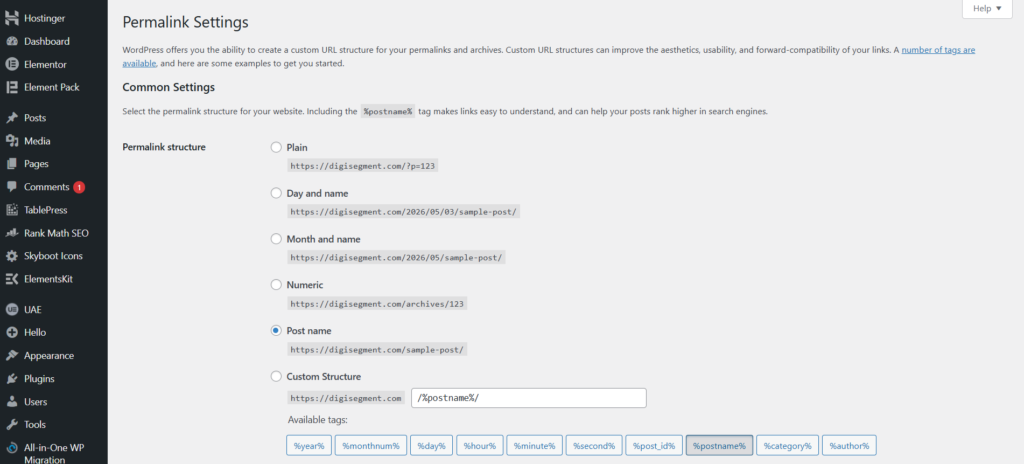
This is the first thing you need to fix on every new WordPress site. And it happens to be the most one that got skipped.
Often your url on WordPress sits with something like yoursite, by default. com/? p=123. This is bad news for users—and Google. No one ever wants to click a URL that resembles a record from some database.
Head over to Settings → Permalinks and select Post Name. Allows you to have URLS that are clean like yoursite. com/wordpress-seo-settings/. It is easy to read, it has your keyword there, and it’s much easier to publish.
A word of caution though: Changing permalink structure is going to break all your old URLs on your site if it has been live for a while. Either do this before you publish any content at all, or have 301 redirects in place if it is done later. This is something that a plugin such as Redirection does well.
We recommend the “Post Name” structure on most of the sites that we set up at HV Digital Marketing.
Rank Math Setup
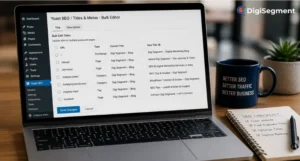
Set permalinks and then get an SEO plugin installed. Most of your WordPress SEO settings will actually live here.
There are two popular options for you to choose from, Rank Math or Yoast SEO. Both work. But as of 2023, Rank Math has pulled ahead for most users (especially newcomers) because it comes with a lot more features within the free version and the setup wizard genuinely helps you configure all settings.
This is a comparison to devise an easier decision.
Feature | Rank Math (Free) | Yoast SEO (Free) |
Schema Markup | Built-in, multiple types | Basic only (paid for more) |
XML Sitemap | Yes | Yes |
Keyword Tracking | Up to 5 keywords | Not available |
Redirections | Yes (free) | Paid only |
Setup Wizard | Detailed, clear | Available |
Google Search Console Integration | Yes | Yes |
Rating | ⭐ 4.8/5 | ⭐ 4.6/5 |
Once you install Rank Math, run the Setup Wizard. Guided connection of Google Search Console, site type (blog, local business, e-commerce), and basic meta tags. Don’t skip this step — it takes about 10 minutes and will save you many hours configuring manually.
Important inner settings you need to properly manage in Rank Math:
General Settings
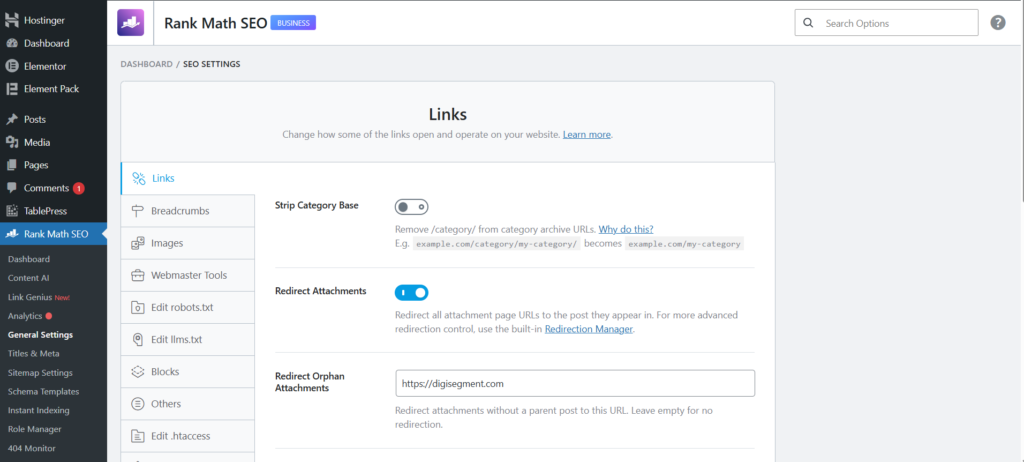
Links: Use Redirect Attachment URLs so your WordPress media attachments pages do not index as thin content. A simple one that trips up many sites.
Titles & Meta
Configure a default title template for all posts, pages or category archives. For posts → %title% – %sitename%, for categories → %term% Archive – %sitename%.
Local SEO
(only for local businesses) → Add your business name, address, phone, and opening hours in the Local SEO tab from Rank Math’s settings. This feeds directly into your schema markup.
Here on “how SEO plugins work”
XML Sitemap
A XML sitemap tells Google which pages exist on your site and the date of last edit. Without one, your content is still discoverable by Google… just not in quite the same time frame or completeness.
When you activate Rank Math, it automatically generates a XML sitemap. You can get yours at yoursite here. com/sitemap_index. xml. Run Pull Request on your browser using that URL. It will have a list of what is sitemapped (1 for posts, 1 for pages, 1 for categories) If this is your view good job.
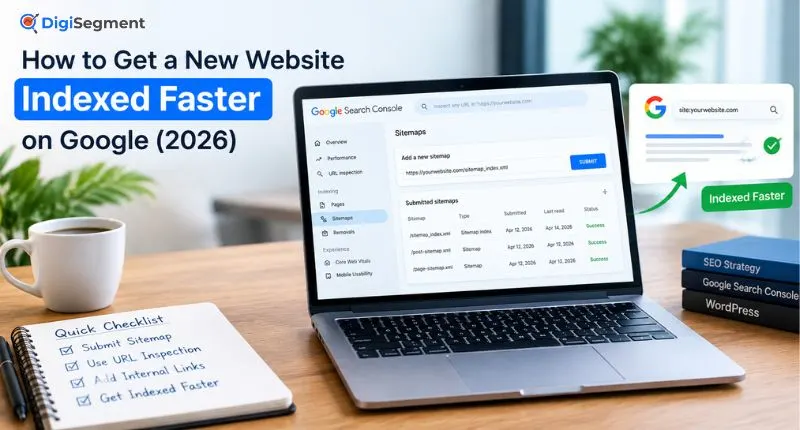
Once you see that the sitemap is live, head over to Google Search Console → Sitemaps and enter the URL. You only have to do this one time and Google will monitor it on its own.
Check your sitemap settings for a couple of things:
Exclude noindex Pages
Any page that you have already marked as noindex (such as thank-you pages, admin login redirects, tag archives) should not show up in your sitemap. If your noindex settings are correct, this is handled automatically by Rank Math.
Images
Check and enable image sitemaps Such Optimisation with best practices helps your images to perform in Google Image Search.
Post frequency and priority
Most sitemap plugins have these fields, but Google has said for years that they don’t care about them much. Don’t overthink it.
Using a sitemap doesn’t ensure indexing (as Google’s documentation explains), it just makes discovery faster on new or updated content. This matters a great deal newer sites particularly.
Link preview – How To start a blog on WordPress
Robots.txt
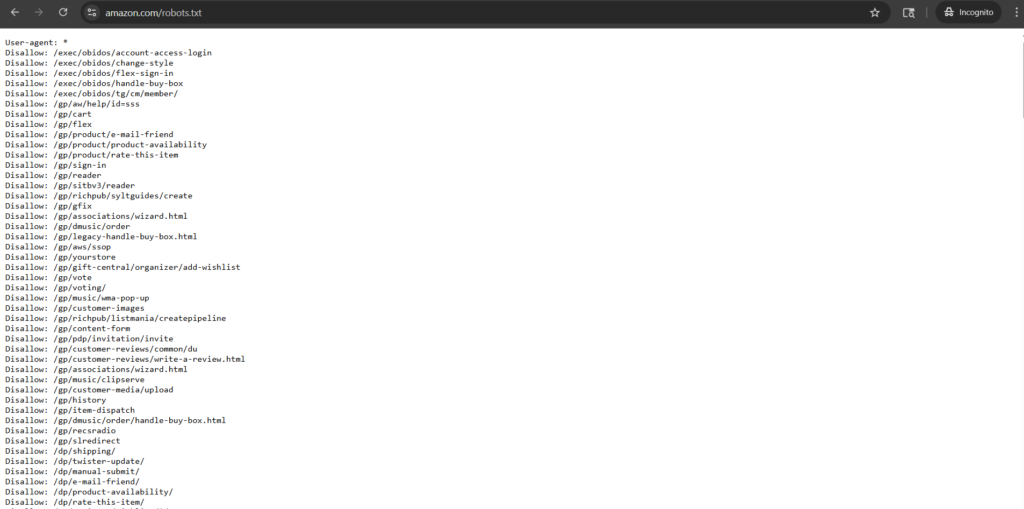
Your robots.txt file informs search engine crawlers what they can and can not access in your site. It lives at yoursite. com/robots. txt — you can test yours at this very moment by entering that URL in your browser.
WordPress creates a virtual robots. txt by default. Most of the time it looks good, but there are some things you should probably check and edit at some point.
What must you have in your robots txt:
User-agent: *
Disallow: /wp-admin/
Allow: /wp-admin/admin-ajax.php
Sitemap: https://yoursite.com/sitemap_index.xml
It disallows Google from crawling your backend with wp-admin. The admin-ajax. Some plugins that load front-end content via Ajax may require phppp allow exception.
NOT to block: Some site owners mistakenly lock up their whole site by placing Disallow: / — basically saying do not ever enter. That has recently been done to some actual sites, and the fall in traffic is swift and brutal. Double-check this.
You can edit your robots. txt using the General Settings → Edit robots option in Rank Math., or using a plugin like Yoast (or connecting straight from your hosting file supervisor.)
Rent a carReferences One thing I would add: Put your sitemap URL also in your robots. txt as shown above. Though crawlers have yet to visit your site from Search Console this gives them a direct link to your sitemap.
Canonical URLs
Canonical URLs solve a problem most site owners do not know they have — duplicate content.
By default, WordPress will keep three versions of the same content. Which means you might have the following things for a single blog post:
- yoursite.com/post-title/
- yoursite.com/?p=123
- yoursite. com/category/seo/post-title/
The three different URLs might be serving you the same content. According to Google, these are three different pages competing against each other. That can separate your ranking signals and damage your position.
Canonical Tag: Your canonical tag tells Google, “This is the master page of this content. Ignore the others.” Both Rank Math and Yoast automatically add canonical tags depending on the permalink settings. Thus, generally most of this is done — once you set your permalink structure to Post Name.
However, there are several prepared cases to watch:
Paginated Content
In the event that you have a really long article that is split into pages, or if you have a category archive with page 2, page 3 etc – ensure the canonical points to first page unless each individual page is actually unique content.
WWW vs non-WWW
Confirm that you’ve configured which version is the default for your domain in Settings → General and in Google Search Console www. yoursite. com and yoursite. com are technically different URLs. Pick one and stick to it.
HTTPS vs HTTP
If you are on HTTPS (which, as of 2026, you should be) then ensure no HTTP versions are being indexed. Rank Math allows you to validate and enforce HTTPS canonicals.
Check out: Technical SEO for small businesses
Image Optimization
One of the most neglected areas of WordPress SEO settings is Images. But with image optimization having a clear impact on page speed, and since page speed is a confirmed ranking factor following the now-famous Page Experience update — Google’s own documentation indicates that it should be tied together.
So here is what you should do with each image uploaded:
Use WebP format
You also might consider WebP files, which are uslaly 25–35% smaller than JPEGs of the same quality. Smaller files mean faster loading. You can upload an image and convert to WebP from go or install a plugin like ShortPixel or Imagify for automatic conversion.
Write descriptive alt text
Alt text is essentially what Google reads to determine the content of an image. It also helps with accessibility. Alt text is to describe images, not stuff with keywords! Specifications: “Good Rank Math SEO settings with an overview in WP.” WordPress SEO settings rich Snippets best WordPress SEO settings 2026 plugin.
Compress before uploading
A 3MB image will be too heavy for your site even with WebP. Most of the time, you want your photos to be less than 150KB each. For manual compressing, tools such as Squoosh (free and browser-based) are efficient.
Use lazy loading
Starting in early 2021, WordPress natively started lazy loading images on version 5.5 (Beautiful ¡) That is, images below the fold do not load until the user comes to them. Make sure this isn’t getting overridden by your theme.
Descriptive file names
Rename your image file prior to uploading. rank-math-seo-settings. webp is better than screenshot_001. png. This file name is considered by Google as part of image context.
Add image showing difference between file size for same photo (JPEG and WebP version) Upload as WebP. Goodly79512Likes589This, in turn, brings us to compressed image formats like JPEG and WebP format for 2026 WordPress SEO. – Use this sentence as alt text for the related image
Schema for WordPress
Schema markup is a type of structured data that helps Google figure out what kind of content you have on a page. It can result in rich snippets being shown in search — star ratings, FAQ dropdowns, breadcrumb trails right within Google’s results.
Put simply: schema is code that tells you This is a blog page written on this date by this author or here is a product with this price and this rating etc., With that, Google is able to present richer and more visually compelling results.
Rank Math makes schema easy. Also, you will see a Schema tab on the right side when editing the post. The plugin gives a default schema-type (mostly “Article” for blog posts) which you could replace with:
- HowTo — for step-by-step guides
- FAQ — for pages containing questions and answers
- LocalBusiness — for business sites
- Product — product pages or reviews
- Recipe — for food blogs
For this particular blog, I would use go with the schema type Article & an FAQ schema for the questions section under. Rank Math allows both to be active on the same page.
The one thing to check: ensure that Rank Math’s Breadcrumbs are turned on and set up in a way your theme supports! When users see breadcrumbs in search results (SERPs), this helps increase click-through rates, because it gives them some context about where on your site that page lives.
In 2023, Schema App conducted a study that showed websites utilizing structured data had increased click-through rates from search results by an average of 40%. So thats not an assured number (for all sites), but you get my point — the needle is always moving in one direction: schema helps.
WordPress Speed and SEO
Whether you want to think about page speed as an aspect of your WordPress SEO settings, it is. LCP, INP and CLS — are Google Core Web Vitals ranking signals Slow site = penalized, even if the content is great.
Key Core Web Vitals to Be Aware of:
LCP (Largest Contentful Paint)
How quickly the main element of your page loads. Target: under 2.5 seconds.
INP (Interaction to Next Paint)
How quickly the page responds when users performs an action. Target: under 200ms.
CLS (Cumulative Layout Shift)
It is a metric that measures how the page unexpectedly shifts around during loading. Target: under 0.1.
You can check your scores at PageSpeed Insights (pagespeed.insights. web. dev). All you have to do is enter your URL and it will give you a run down of what is failing and why.
Caching
WP Rocket or LiteSpeed Cache (free if you use LiteSpeed hosting) Caching is a way of keeping “static” versions of your pages, so instead of WordPress needing to rebuild the page from the database every time someone visits it, their cached version needs to load.
CDN
A “Content Delivery Network” that serves your file from a closer server to your visitor. Cloudflare provides a good base for most sites with their free plan.
Font loading
In the normal way, Google fonts block page rendering. Add display=swap to your font URLs or load fonts locally.
Unused plugins
Nothing out there is free, and every single active plugin adds additional overhead. Take out anything you’re not using.
My Real Experience
I got Digisegment.com set up and thought I was doing everything right. Installed rank math, submitted sitemaps and added schema. A few months later, some posts still weren’t indexed correctly.
Well the problem was actually in robots. txt. A forgotten setting from an old “block all crawlers” temporary during development of the site had never been completely removed. A few pages were still partially blocked. After I took care of that, and then resubmitted the sitemap, those pages started showing up on Google Search Console within a week.
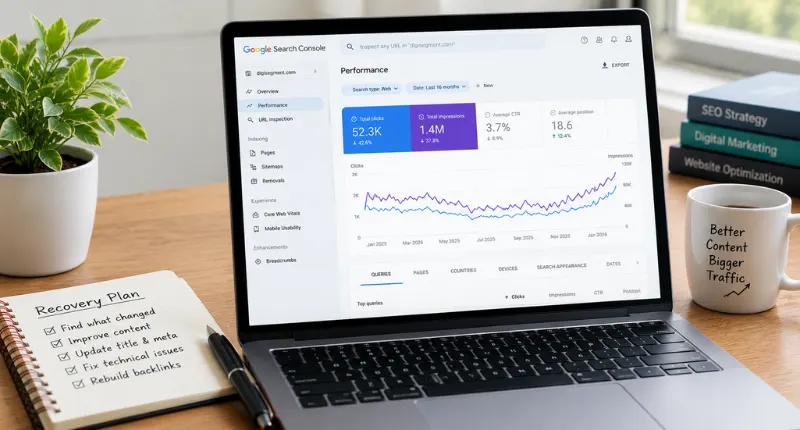
The lesson: Your WordPress SEO settings are not set-it-and-forget-it. Check Search Console regularly. Check Coverage report whether Google is at least not discovering indexing errors. Check the Core Web Vitals report to identify if there are any poor URLs.
Oh, and — I tell you this because I see it skipped continually — check your WordPress Reading Settings so “Discourage search engines from indexing this site” isn’t enabled. That checkbox which you see under Settings → Reading is for development purposes only. However, once some people open the app, they forget to uncheck it. A click once mistake that bans all of your traffic forever.
Final Thoughts
While making your WordPress SEO settings is not something to do in one afternoon, it’s also not as difficult as it seems when you see the full list. Things like permalinks, Rank Math configuration, sitemap, and robots They are like a specific step and specific fix: txt, canonicals, images, schema, speed.
Note: Start from the top of this list. Do one section at a time. When you finish, your site will be years ahead of most WordPress sites — technically speaking — and Google will be able to see and rank your content in the way you want it got ranked.
FAQ
For most sites in 2026, you should be using Rank Math as it gives you more functionality free such as redirects including keyword tracking (up to 5 keywords) and schema options. It assures that Yoast itself is trustworthy, but its free edition has more limitations. If you are already on Yoast and it works, there is no need to migrate urgently.
Get Rank Math or Yoast SEO installed. They both automatically generate a sitemap, accessible at yoursite/sitemap.xml. com/sitemap_index. xml. Submit that URL to Google Search Console in the Sitemaps area once you have confirmed the sitemap is live. That's it — after that, Google checks it itself.
What is myrobots.txt file? A default one will be automatically generated by WordPress. So you can view yours at,yoursite com/robots. txt. The one rule that you want is the Disallow: /wp-admin/ that should be used to keep Google out of your backend. Although, never put Disallow: / if you want your entire site de-indexed from search.
Yes, significantly. A badly coded theme could cause your site to slow down, break structured data or dynamic pages out of the box, display non-mobile-friendly layouts or block Javascript and CSS that Googlebot needs to correctly crawl. Avoid any theme unless it passes PageSpeed Insights tests and contains clean, semantic HTML. GeneratePress and Astra are two of the best lightweight and SEO performance-optimized themes.
Rank Math will give you a content score out of 100 within the posts/pages you create based on keyword, readability, meta tags and schema. Technical SEO screening — Google Search Console (free), Ahrefs Site Audit, Screaming Frog. Core Web Vitals scores: Google PageSpeed Insights gives you your Core Web Vitals score in particular. Utilize all three consistently: they all show slightly different things.